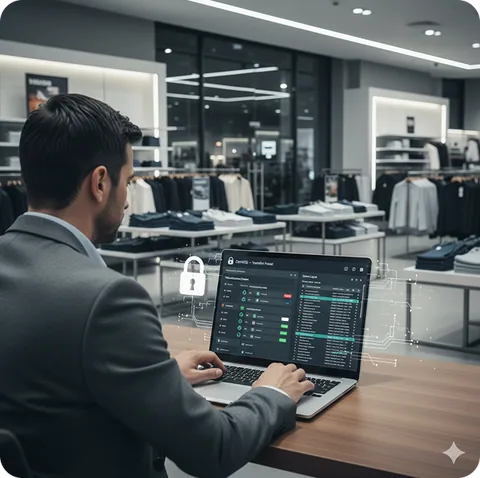
Warehouse Management System (WMS)
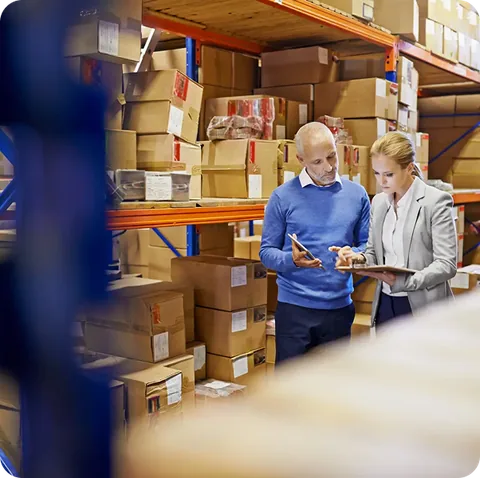
In warehouses with intense shipping and goods receipt, address-based warehouse management is almost a necessity. Knowing which aisles and blocks the products are in, paying attention to planned storage areas during placement, implementing pallet-based movements, and requiring a special software system for these processes. In addition to making the most of warehouse space, one of the goals of warehouse management systems is to make the most efficient use of other resources such as warehouse personnel, handheld terminals, vehicles, and drivers.
Software Units
Warehouse management has two separate working areas: computers and handheld terminals. Functions such as planning, management, and reporting are done on the computer side, while actual stock movements are done on the handheld terminal interface. Since WMS is one of the sub-modules of DerinSİS, it works on the same database as other parts of the information system. With the appropriate internet infrastructure, all functions work through remote access.
WMS as a Logistics Solution
If used as a logistics center, there are web services for integration with the ERP systems of external companies served or with the central ERP system if used independently. Basically, new product, new customer, order information is received, and new dispatch information is sent. When it is a logistics solution, there is a separate B2B system for information exchange with external environments. In this way, customers can report the status of their orders and dispatches, stock information, pallet storage reports, and accrued reports. Additionally, they can enter information into the system for advance purchases and print their labels. Other options such as e-reconciliation, extracts, and invoice lists that accounting departments will benefit from are also offered.
Warehouse Configuration
Warehouse cells (or addresses), the smallest units where stock movements are recorded, form racks, blocks, aisles, and areas, respectively. Based on block templates, storage and picking areas are planned. With the help of the addressing assistant, aisles are created from these blocks. Areas are created according to product features, and products are directed to relevant cells according to storage or access convenience.
Pallet Operations
During goods receipt and shipping, operations are carried out with pallets consisting of the same or different products. Therefore, additional operations such as pallet creation and removal from the pallet are offered. All movements are made on a pallet basis, and data is recorded in the system as physical implementation is done.
Location Codes and Address Labeling
The selection of letters and numbers to be used for aisles, their starting values, naming for right and left sides, and numbering of floors in each block from bottom or top can be chosen flexibly and under the control of the manager. According to the decided code structure, labels of all cells are printed and used in stock movements.
System Orders
After goods receipt, the system decides where to place the products and generates placement orders. For stores' orders to the warehouse, dispatch orders, or sales orders, picking orders are also generated by the system. To ensure integrity according to picking areas, system-generated feed orders for the warehouse are created to eliminate possible dispersion over time. Based on aisle configuration, scenarios such as sequential/U/zigzag can be specified. These orders are assigned to available terminals and warehouse personnel, and the process is initiated.
Cross-Dock Processes
The product-based working method is expressed under WMS. If products are transported without being recognized, only by carrying boxes and packages, the process is called Cross-Dock. A distinguishing feature of DerinSİS Warehouse Management System is that Cross-Dock processes start integrated right after warehouse management processes. Thus, the collected products are boxed, and their volumetric weight information is automatically created. When used as an internal module, it provides efficiency, but when used as a logistics solution, it makes the services provided to customers measurable. Here, the transported load can be measured one-to-one, and automatic calculations can be made with ready-to-use transport box and package vehicles.
Within the framework of customer logistics contracts and ATF integrity, measured packages are directed to appropriate routes, vehicle-driver planning is completed, dispatch notes are printed, shipments are realized, and finally, actual delivery information is collected.
Reports
Records kept for all transactions mentioned above are managed with reports designed to increase warehouse control and efficiency.
Labeling of Product Packages
All labeling processes, such as recording, printing, structurally storing in the warehouse, and controlling pre-shipment labeling of Turkish labels required for imported products, can be managed within the Warehouse Management System.